Table of Contents
- Key Takeaways
- Quick Verdict
- Product Overview & Specifications
- Real-World Performance & Feature Analysis
- Content & Authority
- Design & Readability in Digital Format
- Navigation & Usability
- Accessibility & Inclusion
- Pros & Cons
- Pros
- Cons
- Comparison & Alternatives
- Cheaper Alternative: “Research Design: Qualitative, Quantitative, and Mixed Methods Approaches” by Creswell & Creswell
- Premium Alternative: “The SAGE Handbook of Qualitative Research” (Various Editors)
- Buying Guide / Who Should Buy
- Best For Graduate Students & Doctoral Candidates
- Best for Academic Researchers & Instructors
- Not Recommended For Undergraduate Students
- Not Recommended For Print Purists
- FAQ
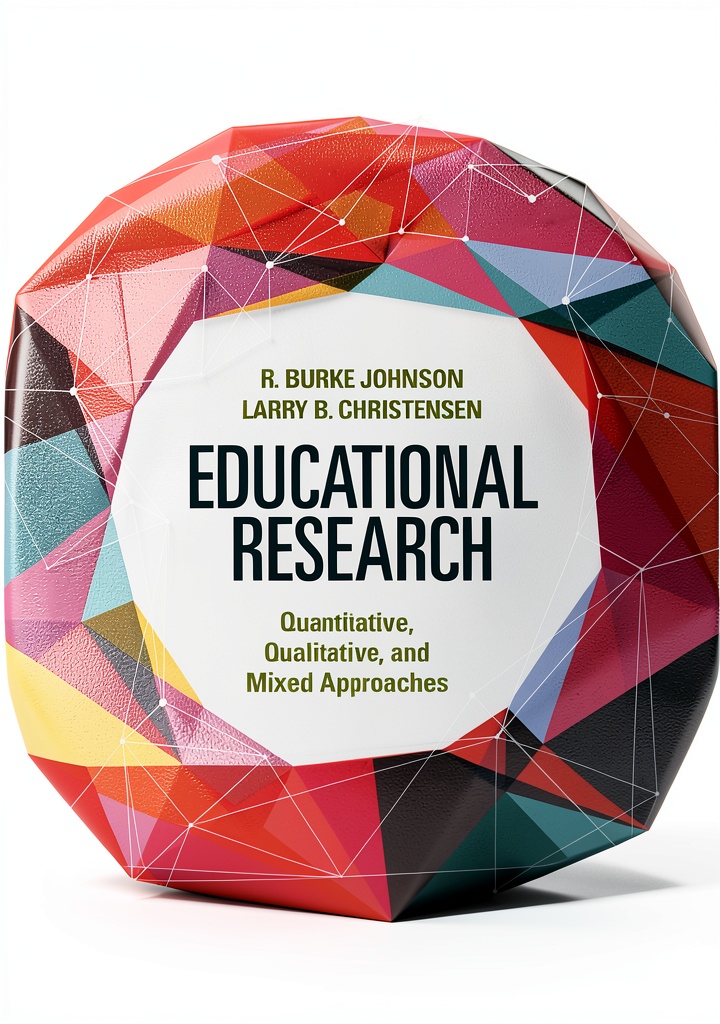
Staring down a thesis proposal or designing a new curriculum often leads you to the same crossroads: you need a foundational text in educational research that’s both comprehensive and actually usable. The market is flooded with options, but finding one that bridges theory and practice without putting you to sleep is the real challenge. The SAGE Publications Education Research Book, now in its 8th edition and available on Kindle, is a name that consistently comes up. But does this latest digital version live up to the hype for the modern student and educator, or is it just another dense textbook digitized without much thought?
Having spent the last decade navigating academic research, both as a doctoral student and now as a professor guiding others, I’ve used my fair share of these texts. The promise of a fully updated, accessible Kindle edition from a trusted publisher like SAGE is compelling. But the real test isn’t the page count or the feature list; it’s how it holds up during a late-night literature review session or when you’re trying to quickly reference a methodology on your tablet between classes. This review breaks down the 8th edition not just by its specifications, but by how it performs in the trenches of academic life.
Key Takeaways
- Comprehensive & Current: The 8th edition integrates contemporary topics like educational data mining and equity-focused research, making it significantly more relevant than older editions.
- Digital Format is a Double-Edged Sword: While the Kindle version offers portability and instant access, the complex tables and figures endemic to research methods can be challenging to read on smaller screens.
- Ideal for Intermediate to Advanced Users: This is not a light introduction. It’s best suited for graduate students, doctoral candidates, and practicing researchers who need a rigorous, reference-quality text.
- Accessibility Features are a Major Win: The enhanced typesetting and screen reader support are not just checkboxes; they genuinely make the content more accessible, a crucial consideration for diverse learners.
- Price vs. Print: At over $90, the digital version’s price point is steep compared to the paperback, demanding careful consideration of whether the Kindle-specific benefits justify the cost.
Quick Verdict
Best For: Graduate students in education, PhD candidates working on their dissertations, and academic researchers who need a rigorous, up-to-date, and portable reference for quantitative, qualitative, and mixed-methods research.
Not Ideal For: Undergraduate students in introductory research courses, casual readers looking for a light overview of education trends, or anyone who strongly prefers physical textbooks for complex, non-linear reading.
Core Strengths: The book’s authority is undeniable, with content that reflects the latest methodological debates and ethical considerations. The digital format, when used on a large tablet or PC, provides excellent searchability and portability. The inclusion of robust accessibility features is a significant advantage.
Core Weaknesses: The high price for a digital copy is hard to swallow. Navigation can be clunky compared to a physical book, especially when flipping between chapters and appendices. The dense, academic prose requires a solid foundational knowledge.
Product Overview & Specifications
The SAGE Education Research 8th Edition for Kindle is the digital incarnation of a cornerstone text in the field. It’s designed to be a comprehensive guide, walking readers through the entire research process—from formulating a question and reviewing literature to selecting methodologies, conducting analysis, and reporting findings. This edition’s claim to fame is its updated content, which strives to be more inclusive and technologically relevant.
| Specification | Details |
|---|---|
| Title | Educational Research: Quantitative, Qualitative, and Mixed Methods Approaches (8th Ed.) |
| Publisher | SAGE Publications, Inc. |
| Publication Date | August 12, 2024 |
| Format | Kindle eBook |
| File Size | 54.7 MB |
| Print Length | 737 pages |
| Supported Devices | Kindle E-readers, Fire Tablets, Kindle App (iOS, Android, PC, Mac) |
| Accessibility | Enhanced Typesetting, Screen Reader Supported, Word Wise |
| ISBN-13 | 978-1071869949 |
| Language | English |
Real-World Performance & Feature Analysis
Content & Authority
Where this book truly earns its keep is in the depth and credibility of its content. This isn’t a surface-level overview. Authors Johnson and Christensen are stalwarts in the field, and the 8th edition reflects a conscious effort to modernize. You’ll find substantive discussions on decolonizing research methodologies and using big data in educational contexts, topics that were peripheral just a few years ago. In practice, this means when you cite this text in your own work, it signals a current and critical understanding of research ethics and practice.
Why it matters: A research methods text can quickly become obsolete. The updates here are not just cosmetic; they address genuine shifts in how educational research is conducted and critiqued. For a doctoral student ensuring their dissertation methodology is defensible, this contemporaneity is invaluable.
Design & Readability in Digital Format
This is the most critical aspect for a Kindle book. The enhanced typesetting is generally excellent for prose. Text flows smoothly, and adjusting font size and background color works as expected, reducing eye strain during long reading sessions. The Word Wise feature, which provides short definitions above difficult words, is surprisingly helpful for navigating the specialized jargon of academia, especially for non-native English speakers or those new to the field’s lexicon.
However, the experience hits a snag with visual elements. Complex statistical tables, charts, and research models do not always scale well on smaller e-ink Kindle screens. While you can zoom in, it often requires panning horizontally, breaking the flow of reading. On a full-sized tablet or the Kindle app on a computer, this is less of an issue, but it’s a significant trade-off for those who primarily use a standard Kindle e-reader.
Real-Life Scenario: Imagine you’re reading about factor analysis and need to study a complex correlation matrix. On a 6-inch Kindle screen, this becomes a frustrating exercise in zooming and scrolling. On a 10-inch iPad Pro, it’s a non-issue. Your primary device dramatically shapes the usability.
Navigation & Usability
The Kindle’s search function is this format’s killer feature for a reference book. Needing to find a specific term like “phenomenology” or “ANCOVA” is instantaneous, a task that would take minutes with a physical index. The hyperlinked table of contents is also a boon for jumping between chapters.
The downside is the loss of non-linear browsing. With a physical book, I often flip rapidly between the current chapter, a previous explanation of a concept, and an appendix. The Kindle’s “Page Flip” feature attempts to solve this, but it feels clunkier than the tactile experience of holding your place with a finger and skimming through pages. For a book that is often used as a reference rather than read cover-to-cover, this is a notable limitation.
Accessibility & Inclusion
SAGE and Amazon deserve praise here. The screen reader support is robust. For students or researchers with visual impairments, the ability to have this dense text read aloud accurately is a game-changer for accessibility. This isn’t just a compliance feature; it’s a core part of making advanced academic content available to a wider audience, which aligns perfectly with the book’s own themes of equity.
Pros & Cons
Pros
- Authoritative & Up-to-Date Content: The 8th edition incorporates current trends and ethical discussions, making it a relevant and credible source.
- Excellent Searchability: Finding specific terms or concepts is vastly faster than in a print book.
- Superb Portability: Carry a 737-page library in your pocket, accessible on multiple devices.
- Strong Accessibility Features: Best-in-class support for screen readers and customizable text.
- Integrated Learning Aids: Word Wise and X-Ray (if available) help decode complex terminology.
Cons
- High Price for a Digital Copy: The cost is close to that of the physical book, which can be hard to justify.
- Poor Rendering of Visuals on Small Screens: Tables and figures are difficult to read on standard e-ink readers.
- Clunky Non-Linear Navigation: Browsing and flipping between sections is less intuitive than with a physical text.
- Dense for Beginners: The writing style is academic and assumes a baseline knowledge, potentially overwhelming newcomers.
Comparison & Alternatives
Before committing to the SAGE 8th Edition, it’s wise to see how it stacks up against the competition.
Cheaper Alternative: “Research Design: Qualitative, Quantitative, and Mixed Methods Approaches” by Creswell & Creswell
- Value Difference: The Creswell book is often less expensive and is renowned for its clarity and structured approach. It’s frequently considered more accessible for beginners.
- When to Choose It: If you are an undergraduate or master’s student in your first research methods course, or if you find the SAGE text too dense. It provides a solid foundation without as much overwhelming detail.
- Trade-off: It may not have the same depth or the very latest methodological discussions found in the newer SAGE edition.
Premium Alternative: “The SAGE Handbook of Qualitative Research” (Various Editors)
- Value Difference: This is not a direct alternative but a complementary, premium resource. It’s an edited volume with chapters from leading scholars, offering deep dives into specific qualitative methodologies.
- When to Choose It: If you are a doctoral student or established researcher specializing in qualitative methods and you need an exhaustive, specialist reference beyond a standard textbook. This is for when the SAGE 8th edition’s chapter on qualitative research isn’t enough.
- Trade-off: It’s more expensive, much longer, and not a balanced guide to all research methods (it focuses exclusively on qualitative approaches).
Buying Guide / Who Should Buy
This isn’t a one-size-fits-all textbook. Your specific needs should dictate the purchase.
Best For Graduate Students & Doctoral Candidates
If you are starting a thesis or dissertation, this book is an excellent investment. The comprehensive nature and current content will serve as a reliable guide throughout the entire research process. The digital format is perfect for taking notes and searching for concepts while writing.
Best for Academic Researchers & Instructors
For professors designing research courses or conducting their own studies, this serves as a strong, authoritative reference. The Kindle version is ideal for quick checks and citations during research or lesson planning.
Not Recommended For Undergraduate Students
Unless required by a professor for an advanced undergraduate thesis, this text is likely overkill. The depth, density, and price make it a poor fit for an introductory course. A more concise and affordable option like Creswell would be a better choice.
Not Recommended For Print Purists
If you are someone who actively uses the physicality of a book—writing extensive marginalia, easily flipping between chapters, and studying complex diagrams—the Kindle version’s limitations will frustrate you. The print version, while less portable, might be a better match for your workflow.
FAQ
Is the Kindle version worth it compared to the paperback?
This depends on your reading habits. If you value portability, searchability, and accessibility features, the Kindle version is superior. If you primarily study at a desk and prefer the tactile experience of a book, the paperback is better. The price similarity makes it a pure lifestyle and workflow decision.
Can I effectively use this on a basic Kindle e-reader?
For reading the prose, yes. For anything involving the figures, tables, or formulas, it will be a compromised experience. I strongly recommend using this book on a tablet (like an iPad or Fire HD) or a computer for the best experience.
How different is the 8th edition from the 7th?
The core structure is similar, but the 8th edition has meaningful updates on technology in research, equity-centered approaches, and contemporary examples. If you are a student, the latest edition is often required. If you’re a professional using it for reference, the 7th edition at a significant discount might suffice, but you’ll miss the new content.
Does the Kindle version include page numbers for academic citations?
Most modern Kindle books, especially academic ones, include real page numbers corresponding to the print edition. You should verify this feature is enabled and functioning on your device, as it is essential for proper citation.
 SAGE Publications Education Research Book 8th Edition Kindle open on a tablet next to a notebook and pen” />
 True Temperature Controller OEM Replacement Commercial