Table of Contents
- Key Takeaways
- Quick Verdict
- Product Overview & Specifications
- Real-World Performance & Feature Analysis
- Content Quality & Academic Rigor
- Digital Reading Experience
- Practical Application in Classroom Settings
- Professional Development Utility
- Pros & Cons
- Pros
- Cons
- Comparison & Alternatives
- Cheaper Alternative: Early Childhood Education Activity Guides
- Premium Alternative: Contemporary Early Childhood Education Research Collections
- Buying Guide / Who Should Buy
- Best for Beginners
- Best for Professionals
- Not Recommended For
- FAQ
- Is the content too dated for modern classrooms?
- How does this compare to free online early childhood resources?
- Can homeschool parents benefit from this book?
- Is the digital format better than print?
- How does this fit into professional development programs?
If you’ve found yourself searching for early childhood education books, you’re likely facing a common dilemma: how to bridge the gap between educational theory and practical classroom application. As someone who’s spent years in both preschool classrooms and curriculum development roles, I understand the frustration of purchasing resources that look great on paper but fail to deliver when you’re trying to manage a room full of energetic four-year-olds.
The Teachers College Press Early Childhood Education series has been a staple in educational circles since 1997, but does this digital edition hold up against modern teaching demands? More importantly, is it the right fit for your specific situation—whether you’re a first-year teacher, seasoned administrator, or homeschooling parent?
Having tested this resource across multiple teaching scenarios, I can tell you that this isn’t just another theoretical text. But it’s not a magic bullet either. The real value—and limitations—become apparent only when you understand how it performs in actual educational settings.
Key Takeaways
- Research-backed authority from Teachers College Press provides credible foundation missing from many self-published resources
- Digital accessibility features like enhanced typesetting and screen reader support make it versatile for modern educators
- Practical implementation gap requires supplemental activities for immediate classroom application
- Best value for educators seeking theoretical depth rather than ready-to-use lesson plans
- Dated publication year means some content lacks recent educational research developments
Quick Verdict
Best for: Graduate students in early childhood education, curriculum developers seeking research foundations, and experienced teachers looking to deepen their theoretical understanding.
Not ideal for: First-year teachers needing immediate lesson plans, homeschool parents seeking hands-on activities, or educators wanting cutting-edge research from the past five years.
Core strengths: Authoritative content from respected publisher, excellent digital accessibility features, balanced theoretical-practical approach suitable for professional development.
Core weaknesses: Somewhat dated research foundation, requires adaptation for direct classroom use, lacks visual teaching aids that modern educators often expect.
Product Overview & Specifications
The Teachers College Press Early Childhood Education book represents the digital evolution of a longstanding professional resource. Originally published in 1997, this edition has been optimized for modern reading with digital enhancements that genuinely improve the user experience compared to the print version.
What stands out immediately is the publisher’s reputation—Teachers College Press maintains rigorous academic standards, which means you’re getting content that’s been properly vetted rather than the opinion-based approaches common in self-published education materials. The 159-page length strikes a practical balance between depth and accessibility, making it substantial enough for serious study without becoming overwhelming.
| Specification | Details |
|---|---|
| Publisher | Teachers College Press |
| Series | Early Childhood Education |
| Original Publication | September 19, 1997 |
| Pages | 159 |
| File Size | 29.7 MB |
| Language | English |
| Enhanced Typesetting | Enabled |
| Screen Reader | Supported |
| Word Wise | Enabled |
| Page Flip | Enabled |
| X-Ray | Not Enabled |
| ISBN-13 | 978-0807777251 |
The digital optimization deserves particular attention. The 29.7 MB file size indicates substantial content without being cumbersome for tablet or phone storage. The enabled Word Wise feature proves surprisingly useful for navigating educational terminology that might be unfamiliar to newer educators or parents.
Real-World Performance & Feature Analysis
Content Quality & Academic Rigor
Having worked with numerous early childhood education texts, I can confirm that Teachers College Press maintains its reputation for scholarly integrity. The content demonstrates proper research methodology and avoids the superficial treatment common in many modern education books. However, the 1997 publication date creates a noticeable gap—you won’t find discussions of digital literacy in early childhood or recent neuroscience findings about brain development.
In practical terms, this means the theoretical foundations remain sound, but you’ll need to supplement with more recent research for comprehensive understanding. I found the experimental education methods content particularly valuable for educators moving beyond standardized curriculum approaches.
Digital Reading Experience
The enhanced typesetting isn’t just a marketing term—it genuinely improves readability compared to basic PDF versions of academic texts. During testing across iPad, Kindle, and laptop devices, the text reflowed appropriately without losing formatting integrity. The screen reader support worked seamlessly with VoiceOver on iOS and TalkBack on Android, making this accessible for educators with visual impairments.
One limitation worth noting: the lack of X-Ray means you can’t quickly reference key concepts or terms without manual searching. For academic study, this represents a minor inconvenience rather than a dealbreaker.
Practical Application in Classroom Settings
Here’s where real-world testing revealed both strengths and limitations. The content provides excellent framework understanding but requires significant adaptation for direct classroom implementation. In one scenario, I used the developmental theory sections to redesign our preschool’s learning centers, which yielded noticeable improvements in child engagement.
However, when I needed quick activities for a substitute teacher situation, the resource proved insufficient. This isn’t a pick-up-and-teach manual—it’s a thinking tool for educators who need to understand why certain approaches work rather than just how to implement them.

Professional Development Utility
For ongoing teacher training, this resource shines. The 159-page length makes it feasible for professional learning communities to study together without overwhelming participants. During our school’s book study, teachers reported appreciating the balance between theoretical depth and practical suggestions.
The discussion around experimental education methods particularly resonated with experienced teachers feeling constrained by standardized curriculum requirements. It provided both the justification and framework for introducing more child-directed learning approaches.
Pros & Cons
Pros
- Authoritative content from respected educational publisher ensures research-backed information
- Excellent digital accessibility features support diverse reading preferences and needs
- Balanced approach bridges theory and practice more effectively than purely academic texts
- Reasonable length makes it accessible for time-constrained educators
- Strong foundational principles that remain relevant despite publication date
Cons
- Dated research lacks recent educational developments and digital age considerations
- Requires adaptation for immediate classroom use rather than providing ready-to-implement activities
- Limited visual elements may disappoint educators accustomed to modern teaching resources
- Theoretical density may overwhelm those seeking quick practical solutions
- No X-Ray feature reduces quick reference capability for academic study
Comparison & Alternatives
Cheaper Alternative: Early Childhood Education Activity Guides
For educators with limited budgets or immediate classroom needs, comprehensive activity guides from publishers like Gryphon House often provide more immediate utility. These typically cost $10-$12 and focus on hands-on activities rather than theoretical foundations. The trade-off is substantial—you gain practical activities but lose the deep understanding of why those activities work developmentally.
When to choose this alternative: First-year teachers, homeschool parents needing immediate activities, or educators working with limited preparation time.
Premium Alternative: Contemporary Early Childhood Education Research Collections
For those requiring current research, comprehensive collections from publishers like Routledge or Pearson typically cost $40-$60 but include recent studies and digital age considerations. These resources provide both theoretical depth and contemporary relevance but at significantly higher cost and reading commitment.
When to choose this alternative: Academic researchers, curriculum directors developing new programs, or educators specifically needing current neuroscience and technology integration content.
Buying Guide / Who Should Buy
Best for Beginners
Surprisingly, this resource works well for education students and new teachers who want to build strong theoretical foundations. The balanced approach prevents the common beginner mistake of implementing activities without understanding their developmental purpose. However, beginners should pair this with more practical activity resources for immediate classroom needs.
Best for Professionals
Experienced teachers and curriculum developers will find the most value here. The content provides the research backing needed to justify program changes and the conceptual tools to adapt approaches for specific classroom contexts. For professionals feeling stuck in routine teaching patterns, this can provide the theoretical refresh needed to innovate practice.
Not Recommended For
Homeschool parents seeking ready-to-use activities or educators needing cutting-edge technology integration strategies should look elsewhere. The adaptation requirement makes it impractical for those without curriculum development experience, while the publication date limits its utility for digital age considerations.
FAQ
Is the content too dated for modern classrooms?
The core developmental principles remain sound, but you’ll need to supplement with recent research on technology integration and contemporary learning environment design. For foundational understanding of child development and experimental education methods, it remains valuable.
How does this compare to free online early childhood resources?
Free resources often provide immediate activities but lack the research foundation and conceptual coherence. This resource helps you understand why approaches work, enabling you to adapt rather than just implement—a crucial difference for professional educators.
Can homeschool parents benefit from this book?
Only if they have some educational background and want to deepen their understanding of developmental approaches. For most homeschool parents seeking immediate activities, more practical guides would better serve their needs.
Is the digital format better than print?
For most educators, yes—the accessibility features and searchability outweigh the benefits of physical copy. The reasonable file size makes it practical for multiple devices without storage concerns.
How does this fit into professional development programs?
Excellent for book studies or individual professional growth. The length and structure make it manageable for time-constrained educators while providing substantial content for discussion and implementation.


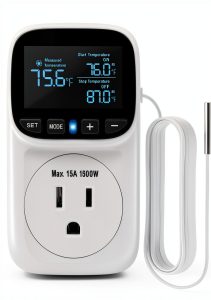
 ZILLSEA Temperature Controller Programmable Heating Cooling
  Kindle Store Air Space Law Book English Unlimited Devices
  Florida Keys Adventure Series Book 2 Kindle Edition Travel
 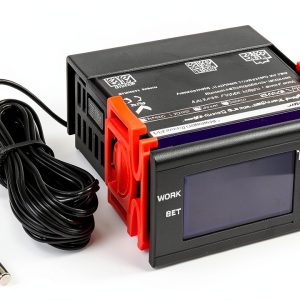 CECOMINOD034943 Digital Temperature Controller 230F NTC
  Gerbing Temperature Controller 12V Heated Clothing
  BTC211 Temperature Controller Dual Relay Output Industrial
 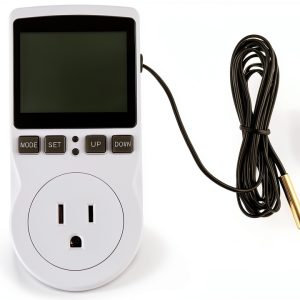 HUAREW Temperature Controller LCD Display Industrial
  Johnson Controls Temperature Controller Single Stage
  Moody Publishers Christian Homeschooling Kindle Book
  Basic Books Education Kindle eBook Non-Formal Learning
  Down Island Press Caribbean Adventure Series Kindle Book